A technical meeting was held dedicated to the reconstruction of the SRC and the modernization of the ARCS of Ukrainian NPPs
On March 2, 2026, a technical meeting was held dedicated to studying the experience of reconstructing radiation control systems (RCS) and modernizing automated radiation control systems (ARCS) of Ukrainian NPPs, where the report was delivered by V. Stefan, Postgraduate Student of the Institute of Nuclear and Nuclear Safety of the National Academy of Sciences M. Savelyev, and Chief Researcher of the Institute of Nuclear Safety of the National Academy of Sciences.
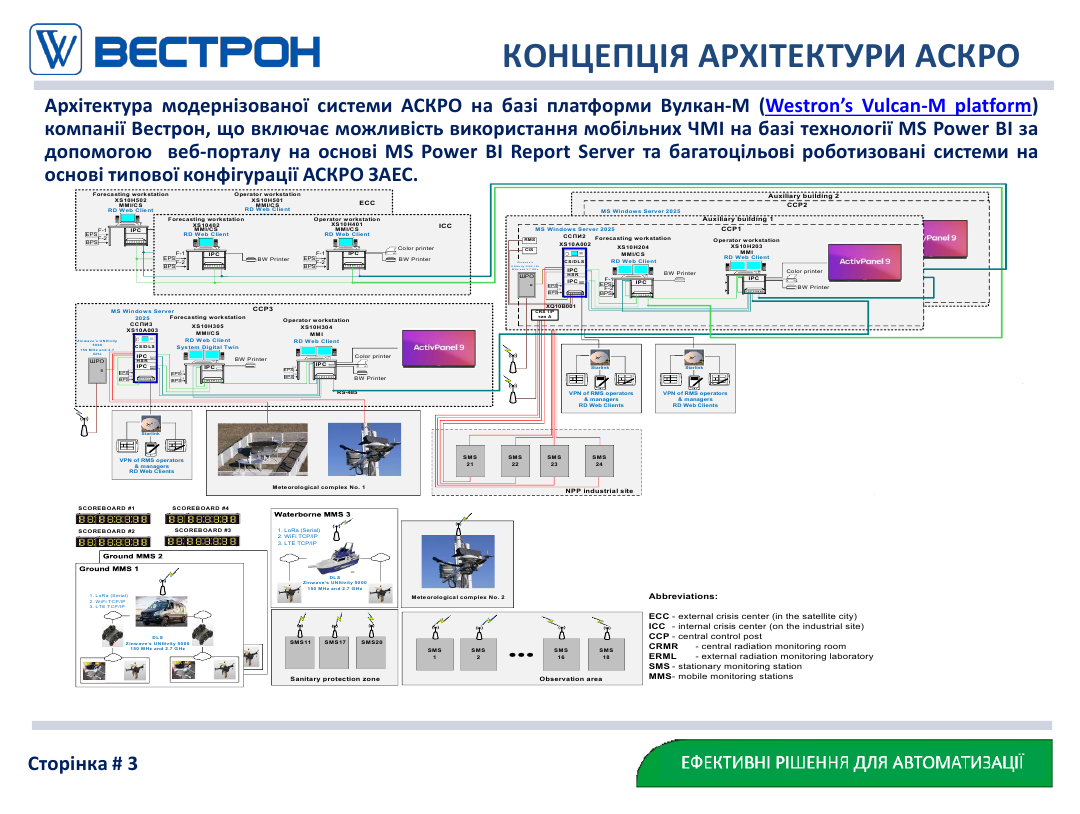
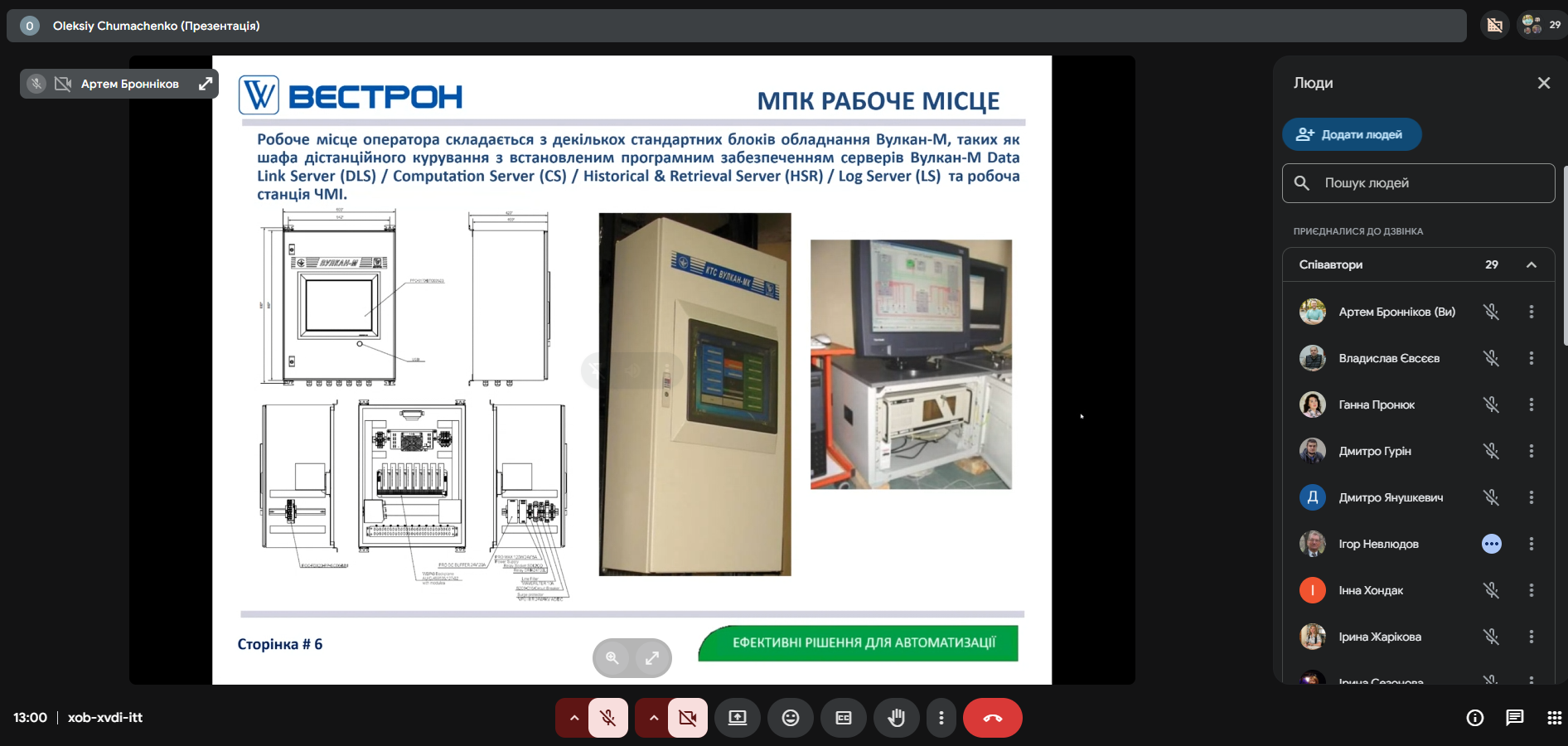
The key topic of discussion was the integration of modern mobile and robotic solutions into the overall security architecture of nuclear facilities based on the Vulcan-M software and hardware complex from Westron.
Why modernization is critical?
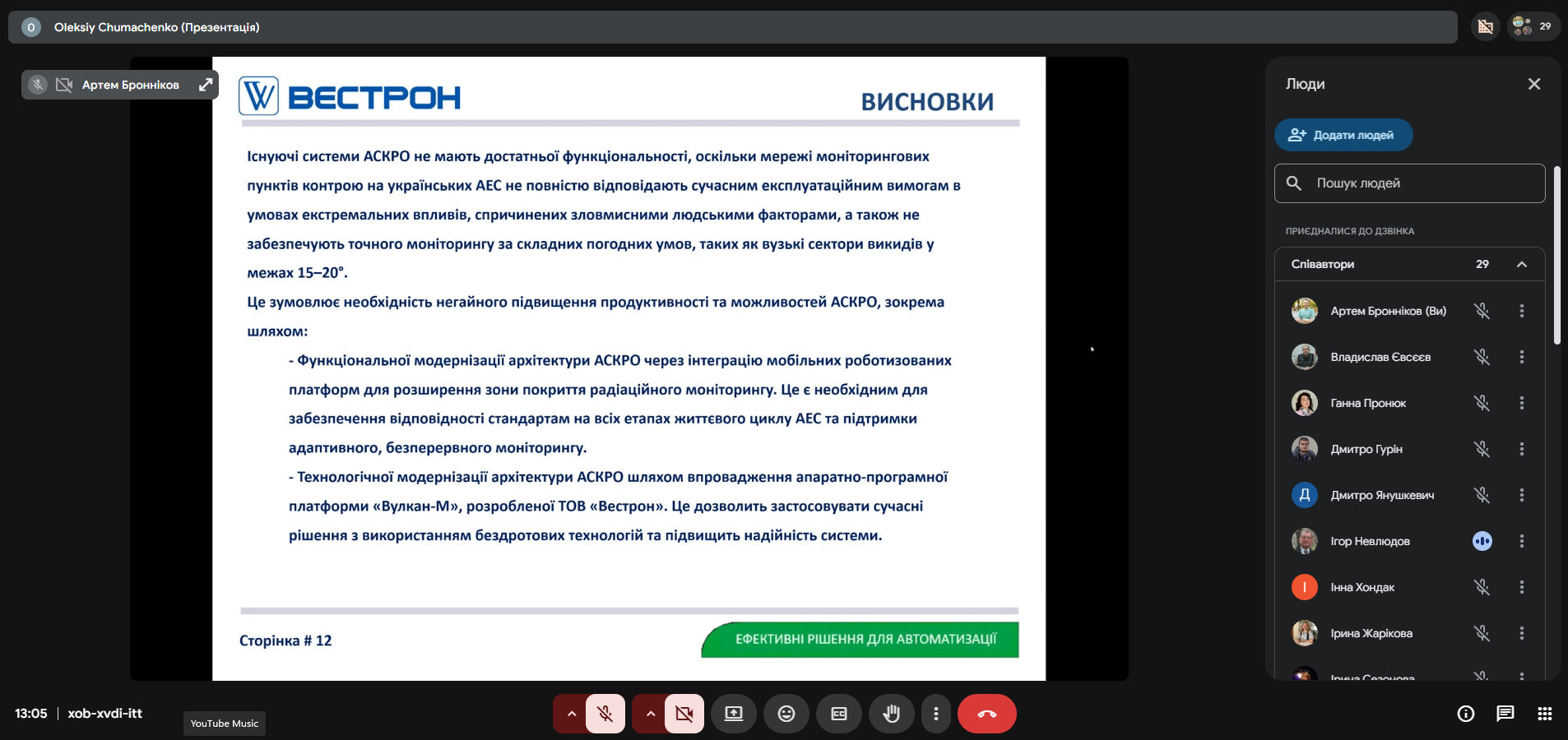
As experts note, existing stationary ASKRO systems in conditions of military threats and unstable infrastructure (for example, the situation at the ZNPP) have certain vulnerabilities. In particular, stationary points cannot always ensure stable data transmission in emergency situations, and communication failures and loss of GPS signal reveal the need for autonomous solutions. In addition, existing networks need to be improved for accurate monitoring in difficult weather conditions, for example, with narrowly directed emissions (15-20°).
Latest solutions: Drones and quadrupedal robots
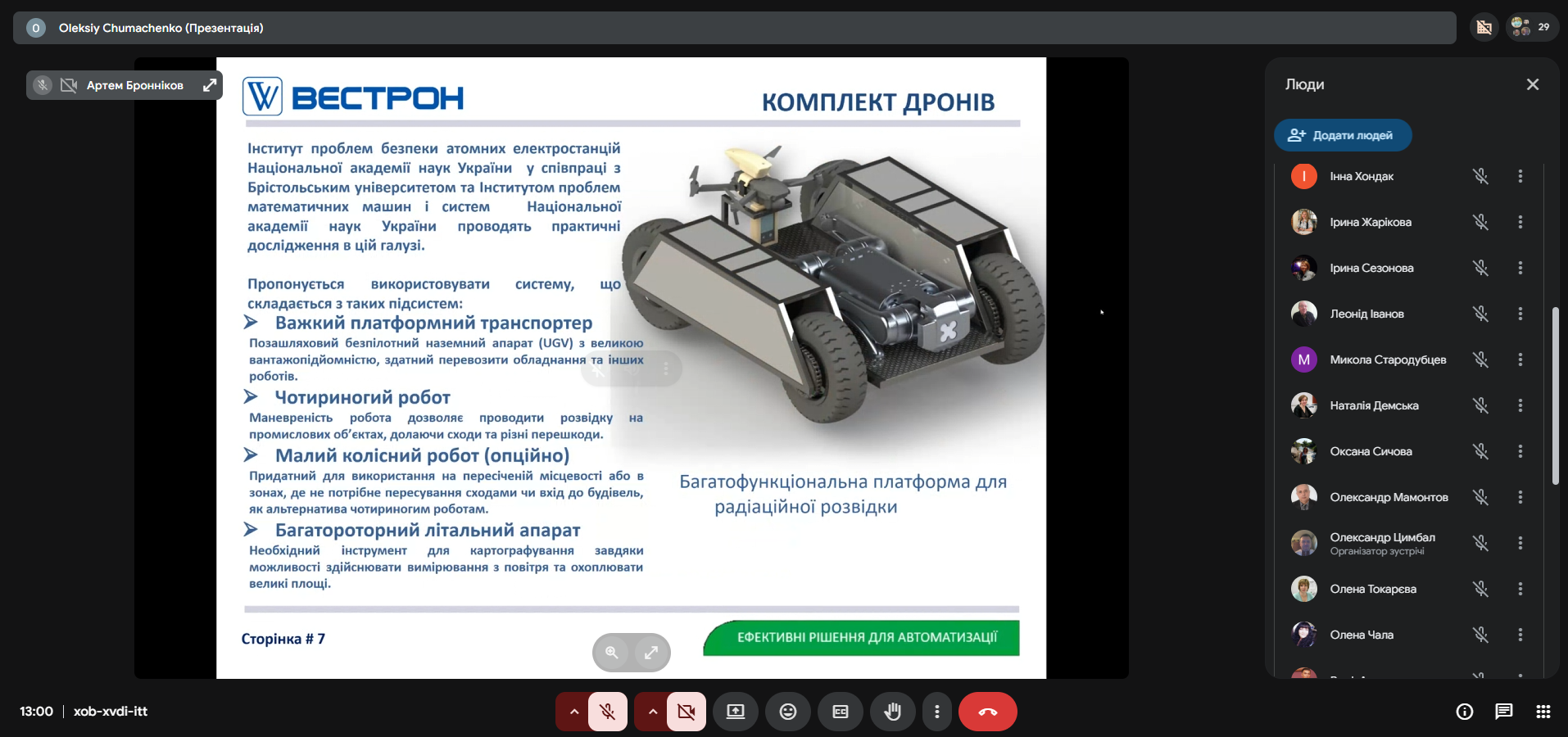
The modernization concept involves the creation of a hybrid architecture that combines stationary control points with mobile platforms. The updated system is planned to include:
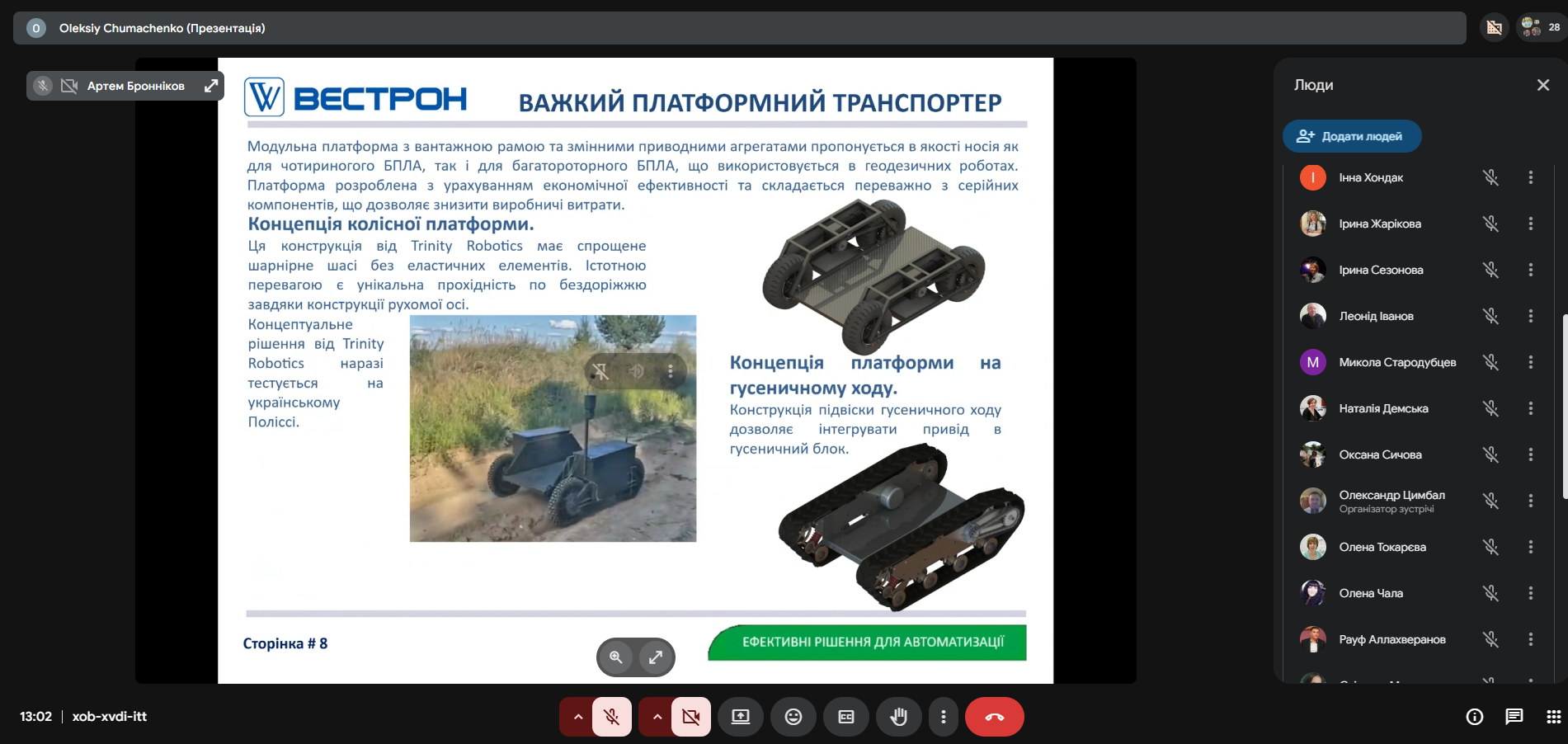
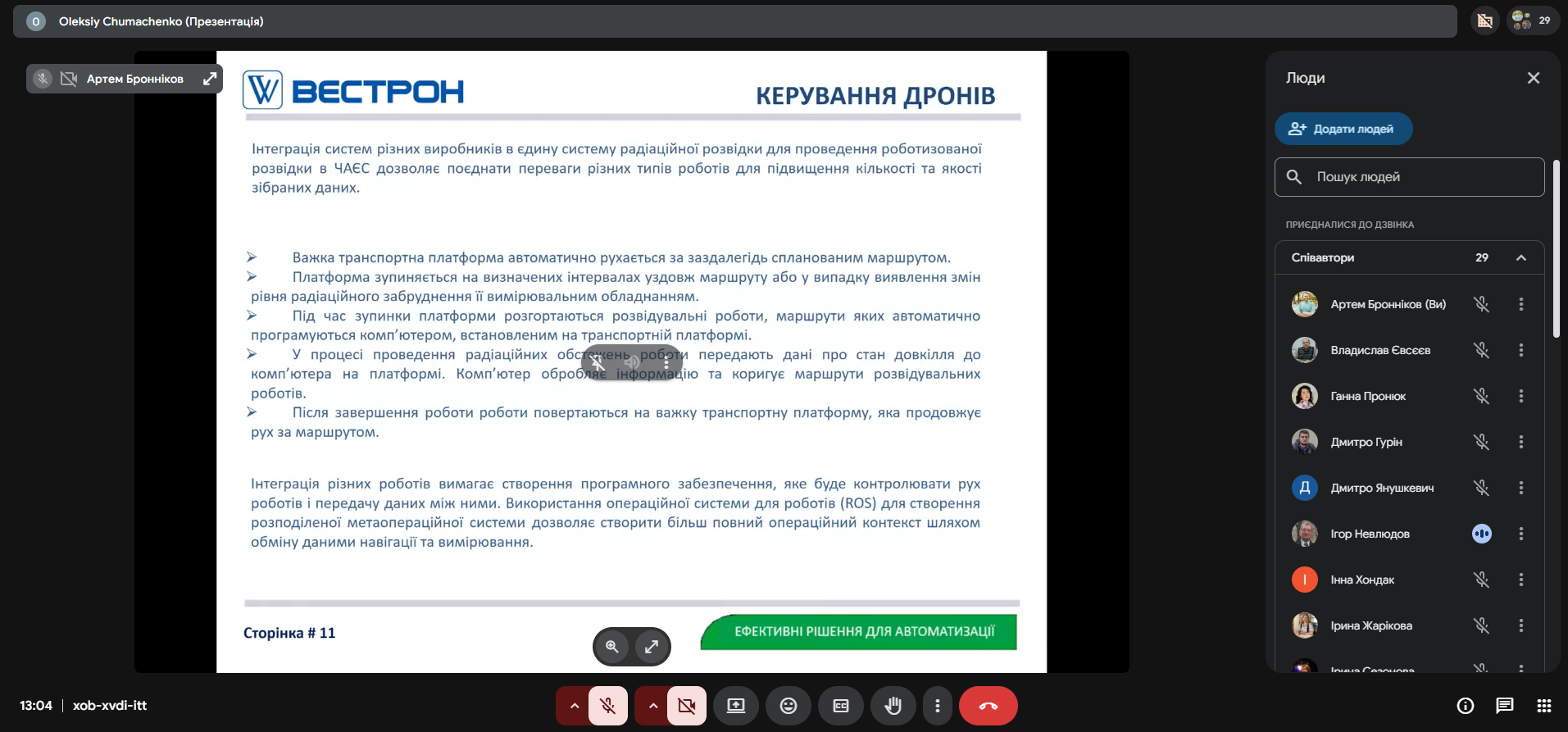
- Heavy-duty vehicles (UGVs): Off-road drones that serve as a “base” for transporting other equipment and robots.
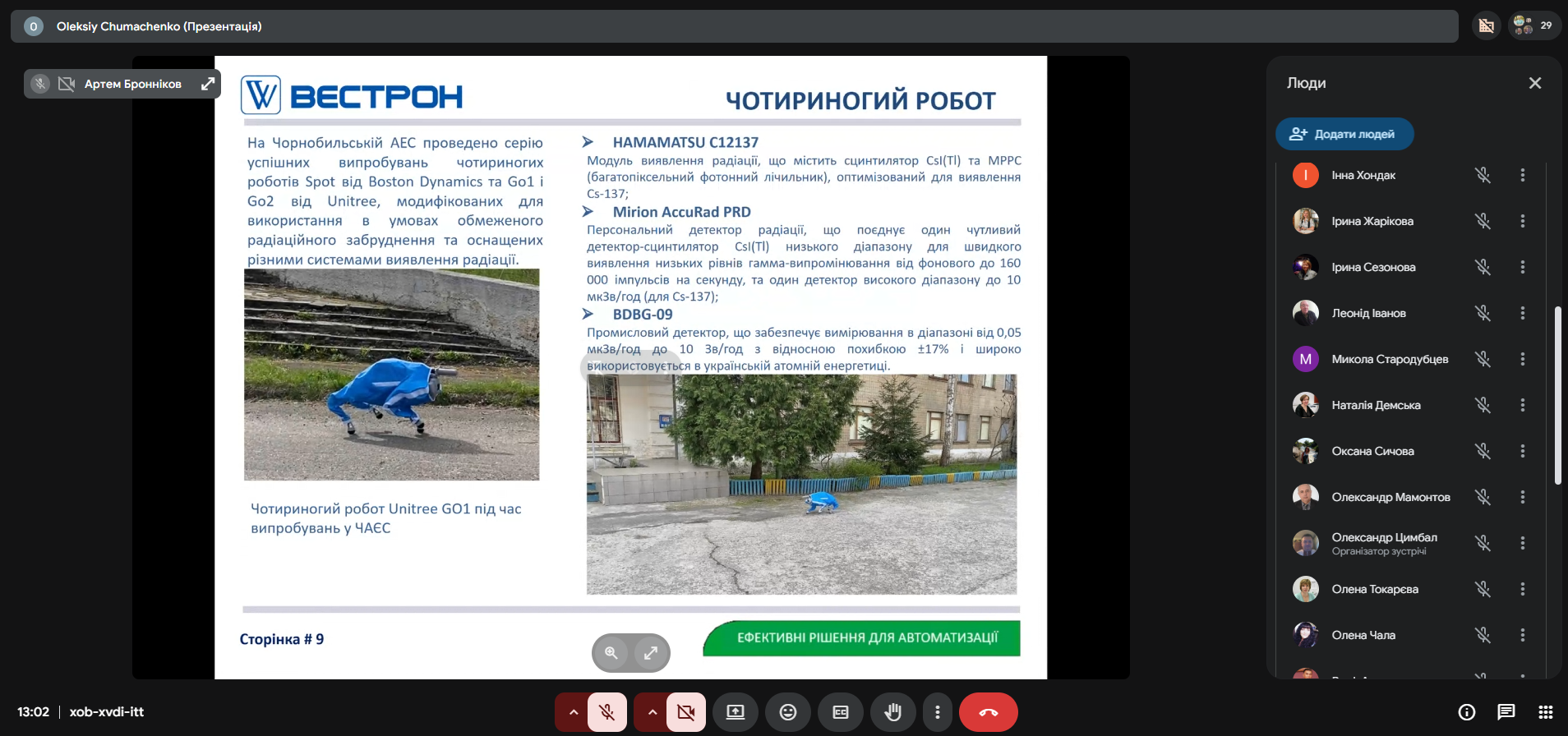
- Quadrupedal robots (e.g. Unitree and Spot): Due to their high maneuverability, they are able to conduct reconnaissance inside industrial premises, overcoming stairs and obstacles.
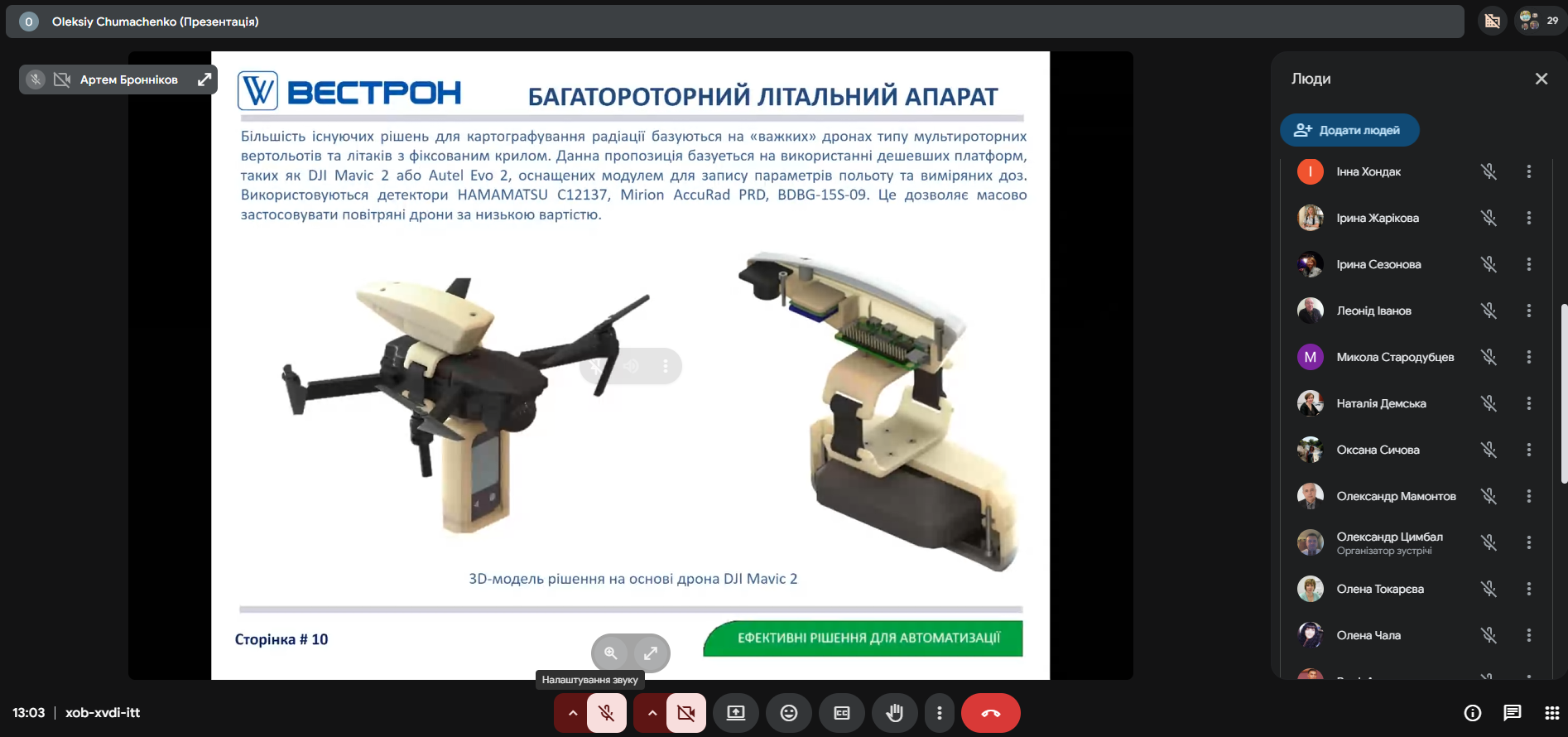
- Multi-rotor aerial vehicles (UAVs): Used for rapid 3D mapping of radiation contamination over large areas.
Such robotic complexes allow for radiation reconnaissance and sampling without risk to personnel, significantly reducing the dose load during inspections.
The proposed solutions are already undergoing practical testing. In particular, a series of successful tests of four-legged robots and aerial drones were conducted at the Chernobyl NPP and in the Ukrainian Polissya region in collaboration with scientists from the University of Bristol.